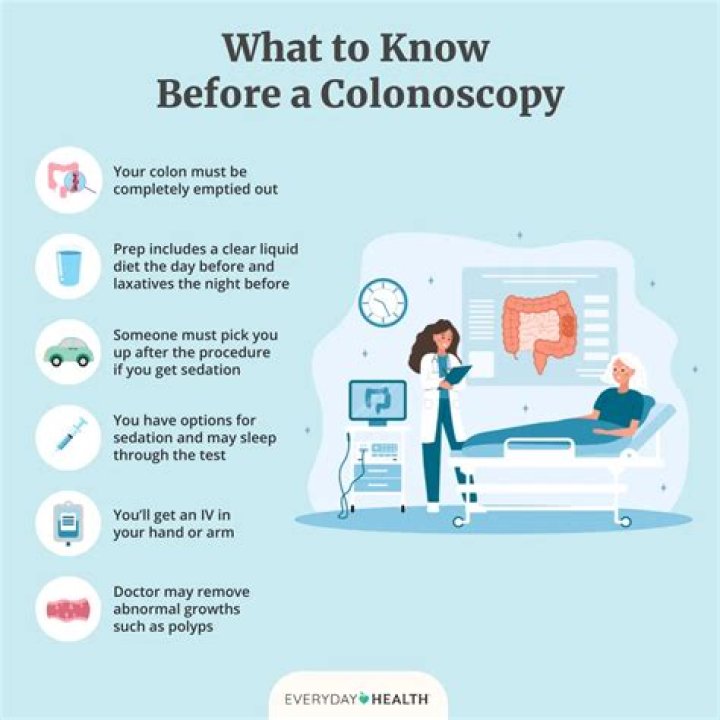
Colon cancers develop from precancerous polyps that grow larger and eventually transform into cancer. It is believed to take about 10 years for a small precancerous polyp to grow into cancer.
Can colon cancer develop in 3 years?
Approximately 6% of colorectal cancers are diagnosed within 3 to 5 years after the patient received a colonoscopy, according to findings from a recent population-based study.
Does colon cancer grow fast or slow?
In most cases, colon and rectal cancers grow slowly over many years. Most of those cancers start as a growth called a polyp. Taking out a polyp early may keep it from turning into cancer.
How long does it take for a tumor in the colon to grow?
Colon cancer, or cancer that begins in the lower part of the digestive tract, usually forms from a collection of benign (noncancerous) cells called an adenomatous polyp. Most of these polyps will not become malignant (cancerous), but some can slowly turn into cancer over the course of about 10-15 years.
What is the growth rate of colon cancer?
The median linear growth rate was 0.083 mm/day (0.008-0.262 mm/day). The median time for doubling of tumor volume was 130 days (53-1570 days), assuming a three-dimensional pattern of tumor growth.
32 related questions foundWhat percent of colon tumors are benign?
American College of Surgeons. "Incidence of cancer in patients with large colorectal polyps lower than previously thought: 92 percent of the colorectal polyps in patients referred for operations were noncancerous, suggesting advanced endoscopic treatments may be a viable option." ScienceDaily.
How fast can colon polyps grow?
The fastest-growing polyps and cancers had an estimated doubling time of between 138 and 866 days; the fastest growing cancer grew 2.5 mm in 100 days.
Does size of colon tumor matter?
Multivariate analysis indicated that tumor size is an independent prognostic factor for stage II patients, and compared to tumors <5.0 cm, tumors ≥5.0 cm were more likely to result in a better CSS (HR 0.775, 95% CI 0.691–0.870, p < 0.001).
How long does it take for a polyp to grow in the colon?
The growth and mutation of colon polyps into cancer is a slow process, taking an estimated 10 years on average. So as long as patients are screened, it is unlikely they will develop cancerous polyps. Simply getting a colonoscopy after turning 50 can help save your life.
When do symptoms of colon cancer appear?
At times, symptoms of colorectal cancer may not show up until the cancer has advanced. Because symptoms can go unnoticed during the early stages of the disease, guidelines recommend colon cancer screenings begin at age 50.
Do colon cancer symptoms come on suddenly?
Screening for colorectal cancer
Colorectal cancer doesn't just appear suddenly. It starts as a small growth on your colon, called a polyp, which rarely causes symptoms. If left alone over many years, polyps can grow into cancer.
Can you feel colon cancer lump?
Exams and Tests
Through screening tests, colon cancer can be detected before symptoms develop. This is when the cancer is most curable. Your doctor will perform a physical exam and press on your belly area. The physical exam rarely shows any problems, although the doctor may feel a lump (mass) in the abdomen.
Can you get colon cancer 2 years after colonoscopy?
This means cancer and polyps can sometimes go undetected. So, despite having had a 'clear' colonoscopy, some patients go onto develop bowel cancer – referred to as post-colonoscopy colorectal cancer (PCCRC) or 'undetected cancer'.
How long can you live with untreated colon cancer?
The results showed the median survival of patients to be 24 months (range 16–42). One-year survival was found to be 65% while the 2-year survival was found to be 25%. A satisfactory quality of life was also observed.
Can colon cancer go undetected for years?
Because early stages of colon cancer can go unnoticed for years, screening is important for early detection. It is generally recommended that individuals at average risk for colon cancer receive a screening test every 10 years.
Is a 5 cm tumor in the colon big?
Conclusions: Tumor size of 5 cm is an independent prognostic parameter for patients with stage III( colon cancer but not for stage II(. Determination of the association between tumor size and survival should be base on TNM staging.
Is a 2 cm colon tumor big?
Tumour (T)
Tumour describes the size of the cancer. It is divided into 4 main stages. The tumour is no bigger than 2 cm. It has only grown into the inner lining of the bowel (the mucosa), or into the next layer (the submucosa).
What is the average size of a colon tumor?
Results: Median tumor size was 4.5 cm (range, 0.6-15). Tumor size exceeding 4.5 cm was observed in 159 patients (44%) and was associated with high T and N classification, UICC stage, and tumor grade. At median follow-up of 45 months (range, 0-180), 141 patients (40%) showed tumor progression.
Is a 1 cm polyp big?
Number and Size. Approximately 1% of polyps with a diameter less than 1 centimeter (cm) are cancerous. More than one polyp or a polyp that is 1 cm or bigger places you at higher risk for colon cancer. Up to 50% of polyps greater than 2 cm (about the diameter of a nickel) are cancerous.
Is a 5 mm polyp big?
Polyps range from the less-than-5-millimeter “diminutive” size to the over-30-millimeter “giant” size. “A diminutive polyp is only about the size of a match head,” he says. “A large polyp can be almost as big as the average person's thumb.”
Can a doctor tell if a polyp is cancerous by looking at it?
A gastroenterologist, the specialist who usually performs a colonoscopy, can't tell for certain if a colon polyp is precancerous or cancerous until it's removed and examined under a microscope.
How long does it take for colon cancer to spread?
The research also suggests that once a colon carcinoma develops, if it is going to spread outside the colon, it will do so in less than two years. Our research implies that the genetic machinery that causes metastases is hard-wired into the tumor from the beginning.
Is colon cancer curable at Stage 3?
Stage 3 colon cancer
This is because with surgery alone, less than half the people with stage 3 disease will be free of cancer 5 years later. Adjuvant chemotherapy can reduce this risk of recurrence by 30% to 50%, and it improves overall survival by 30%.