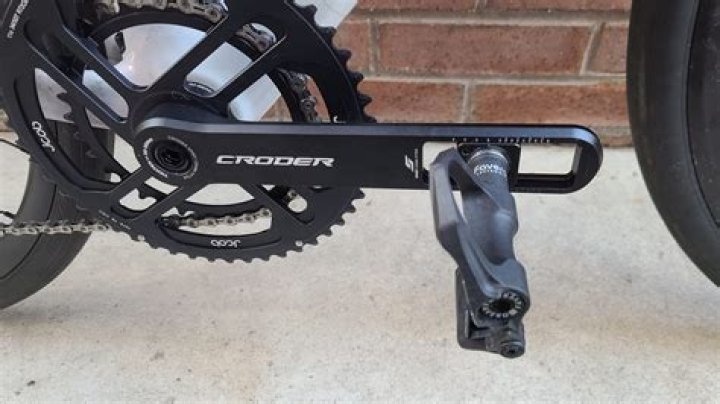
Multiply the front gear number by the rear gear number to get the number of speeds. For example, if you have two front gears and five back gears, you have a 10-speed bike. If you have one front gear and three back gears, you have a 3-speed bike.
What is the difference between a 10 speed and 11 speed bike?
10 speed chains are slightly different from 11 speed. 10 speed chainrings are slightly different from 11 speed, but in most cases, you can simply swap out the chainrings instead of buying a whole new crankset. Some rear hub cassette bodies are only designed to accomodate up to a 10 speed cassette.
How do I know how many gears My bike has?
The first number is the number of teeth on the smallest of the 8 gears. The second number is the number of teeth on the largest of the 8 gears. The number is often engraved on the gear, so if you use that, just make sure you take the number from the largest gear.
What is an 11 speed bike?
Road bike gears may seem complicated at first, but use them properly and you'll soon by riding much more efficiently. The latest road groupsets are now 11-speed, meaning the rear cassette has 11 sprockets. Experienced riders will change gear frequently to maintain a high cadence.
How do I know what cassette is on my bike?
How to Tell What Bike Cassette You Have. Cassettes are defined by their sprocket number (number of teeth). A cassette generally has two numbers. The smallest is the teeth count on the smallest sprocket/cog, while the second number is the teeth count on the larger sprocket/cog.
40 related questions foundWhat is an 11 speed cassette?
The rear cassette is 11 speed 11-32. This means there are 11 cogs ranging from 11 teeth up to 32 teeth (the exact cogs are 11/12/13/14/16/18/20/22/25/28/32). The combination of your selected chainring and cog determine the gear ratio.
How do you tell if your bike is 9 or 10-speed?
Multiply the front gear number by the rear gear number to get the number of speeds. For example, if you have two front gears and five back gears, you have a 10-speed bike.
What is 10 speed bike?
A 10-speed bike is a type of road bicycle that allows you to change the pedaling resistance through a shifting mechanism. The various gears provide up to 10 different resistance settings, or speeds. This type of bicycle engineering makes riding on hilly terrain over long distances easier.
What is a ten speed?
Definition of ten-speed
: a bicycle with 10 gear combinations.
How do you shift a 10 speed bike?
How to Change Gears on a 10-Speed Bicycle
- Locate the shift levers on your bicycle. ...
- Mount your bicycle and start riding slowly. ...
- Pedal slowly and steadily as you reach for the lever on the right-hand handlebar. ...
- Continue pedaling slowly and steadily as you reach for the lever on the left-hand handlebar.
How many speeds do I need on my bike?
In terms of how the number of gears affects the overall ride of the bike, a 21-speed is generally faster with smoother transitions and pedaling. The 7-speed is adequate for most riders, which is why many people choose the slower option.
What gear should I use on a flat road?
High Gear. This one is great for descending, accelerating, or for use when you want to go nice and fast on a flat road. In a high gear, you travel a long way for each turn of the pedal.
Can I use a 10 speed cassette on a 11 speed bike?
Luckily, many common and not-so-common wheelsets, as long as they're at least 10-speed, can be upgraded to 11-speed by purchasing a new cassette body. The body is the part that attaches to the center of the hub and drives the wheel and bike when you pedal.
Is 10 speed enough for road bike?
Are 10-speed bikes good? Yes, 10-speed bikes are good simply because they have a lot of range. If you're climbing a mountain, they're not the best. However, if you're just climbing a hill, then you'll be all set with a 10-speed bicycle.
Are Shimano 10 and 11 speed compatibility?
Shimano's mechanical 10- and 11-speed road shifters are not compatible with its 10- and 11-speed MTB derailleurs. Wolf Tooth's Tanpan adapter solves the incompatibility, though, so riders can potentially make use of cassettes with sprockets as large as 46T.
When did the 10 speed bike come out?
1960 Schwinn Continental—Schwinns' First Ten-Speed.
What does 10 speed mean in a car?
The all-new 10 speed automatic transmission is the first 10 speed automatic for a volume production car. The performance 10 speed transmission transfers power and torque with quick shifts and maintains more engine power after each shift.
How many gears is a 10-speed?
A 10-speed is two 5-speeds, one on top of the other. The shift pattern is an M. Splitter Down: 1st-5th and Low Reverse.
Are 12 speed bikes good?
And thanks to improved materials and tolerances, they're also much more reliable overall, even if they can be a little finicky compared to those 8 and 9-speed systems. 12-speed drivetrains pretty much killed the front derailleur as well, especially after 11-speed showed that maybe we didn't need them after all.
What is average cycling speed?
The majority of riders can average a speed of about 15 mph on a one hour ride. A good speed for a beginner is 10 mph, but you should be able to get to 15 mph pretty quickly. If you start training every once in a while, you could get your average up to 18 mph, but training on a regular basis could get you to 22 mph.
What is the hardest gear on a bike?
High Gear = Hard = Good for Descending: The “highest” gear on your bike is the largest chain ring in the front and the smallest cog on your cassette (rear gears). In this position, the pedaling will be the hardest and you'll be able to accelerate while traveling downhill.
Will a 10 speed rear derailleur work with 11 speed?
10-speed rear derailleurs do not work accurately with 11-speed cassettes when coupled with index shifters. The only exception are SRAM's 10-speed exact actuation road derailleurs which have the same rear shift ratio as SRAM's 11-speed road (exact actuation) and 10-speed MTB (exact actuation) derailleurs.
How do I know what kind of cassette I have?
Registered. The numerals indicate the number of teeth on the smallest and largest gears (cogs), so a 12-28 cassette has a 12-tooth small cog and a 28-tooth large cog. The smallest cog is your highest gear (high speeds) and the largest one is your lowest (lowest speeds).