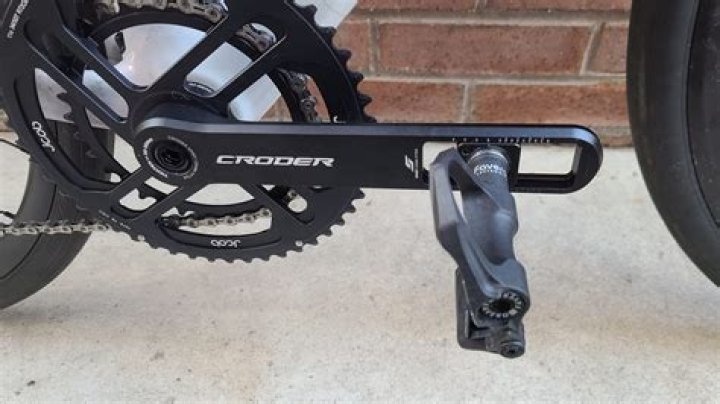
Threaded bottom brackets use a shell with internal threads to hold threaded parts. The frame shell may be threaded directly at the shell, or there may be an insert installed that has internal threads.
Is a threaded bottom bracket better?
After a decade or so of press-fit bottom brackets being the dominant system on high-end road bikes, there has – to almost universal acclaim – been a notable return to threaded bottom brackets in the last few years.
What is the difference between threaded and press fit bottom bracket?
Before all you Knights of the Royal Order of the Threaded Bottom Bracket draw your swords, please understand that technically, ALL bottom brackets are press-fit designs. The only physical difference is that the conventional BB's bearing is pressed into a cup, while Press-fit types.
How do I know what type of bottom bracket I have?
To find out the size of bottom bracket needed, measure the inside of the bottom bracket shell in your frame, it will be 73mm, 70mm or 68mm. Some older frames may have Italian threaded bottom brackets, instead of the more modern English.
How do you install a bottom bracket thread?
Installation
- Prepare threads and pressed surfaces. Use a bottom bracket press such as the BBP-1.2 to press in the non-drive-side cup first. ...
- Use a bottom bracket press to install cup. ...
- Install the other side. ...
- Apply inward pressure to keep wrench flats engaged.
Do I need to change bottom bracket if I change crankset?
To answer your question specifically, yes cranksets require a specific bottom bracket, especially so the new offerings from SRAM and Shimano and others.
How long does a bottom bracket last?
As for a bottom bracket, on the low end, maybe 5000 miles. The basic Shimano one most people use (UN51/55/similar) can reasonably expect 10k+ miles. But sometimes you get unlucky and get a bottom bracket that lasts maybe 500 miles.
Why is it called a bottom bracket?
I think it's derived from the lugs used to hold the frame together as per Mick F's post. It then spilled over to refer to the mechanical bearing for the cranks. The actual 'bottom bracket' lug is now referred to as the 'bottom bracket shell' which rather cements the name 'bottom bracket' to the bearing for all time!
Does bottom bracket make a difference?
(Click here to read BikeRadar's complete guide to bottom brackets.) According to Friction Facts' latest report: “No statistically significant difference exists showing a general advantage or disadvantage of a standard type under similar loading conditions.
What cranks will fit my bike?
Cranks come in a range of sizes, most commonly from 165mm to 190mm, and ideal crank length is often determined by three factors: your height, your cycling discipline and your personal preferences. If you change your crank length, it will change how it feels to pedal your bike, and it may change your fit on your bike.
Are bike bottom brackets universal?
However there are many different sizes and iterations according to manufacturer – BB30, PF30, BB90 ,PF86/92 to name but a few – and not all are interchangeable.
Do press-fit bottom brackets creak?
The reality is pressfit has nothing to do with creaking. There are many areas of a bike where bearings have a pressfit and there are no problems. For example, wheels, freehubs, pulley wheels and some headsets are pressfit yet they don't generally creak.
How much does it cost to replace bottom bracket?
A new bottom bracket can vary wildly in cost, from $15 all the way up to $250(£10-£180), so it largely depends on how much you are willing to pay.
Why does my bike click when I pedal hard?
The chain will rub against the derailleur only in some gears since it changes its angle as you shift gears. That's why your bike makes a clicking noise when pedaling hard. So, you need to shift your bike into the gear where you hear the clicking.
Why do bottom brackets fail?
The fail by water and grit entering the bearing and causing the cartridge bearings to get loose. This is felt by poor shifting or chain rub, and finally the bearing can get very stiff if the balls jam up inside. External bearings can be cleaned and adjusted. Most have some sort of seal that can also be replaced.
Are all bottom bracket threads the same?
Threaded bottom brackets shells have been made over time in various thread standards that are not interchangeable. The common threaded bottom bracket uses cups or adaptors with the thread specification of 1.37″ x 24 threads per inch (approximately 34.8mm diameter).
Can I change bottom bracket?
How to remove and replace a creaking bottom bracket
- Removing the cranks. ...
- Decompress the bearings. ...
- Release the safety catch. ...
- Crank extraction. ...
- British or Italian threads? ...
- Clean up the threads. ...
- Fit the new bearings. ...
- Replace the chainset.
Is it worth it to upgrade bottom bracket?
Reasons to go for the upgrade
Usually if both chainrings and the bottom bracket are worn out, you might as well upgrade to the new setup rather than buy all the parts for your old unit. Besides getting something that matches the rest of the parts, you'll know you're hammering on brand-new crankarms, too.
How do I know if my crankset is compatible?
In most cases three-and two-piece cranksets are compatible with the same bottom brackets so long as the axle is the same diameter. They are commonly used in conjunction with the mid-style bottom bracket standard. One-piece: This is where the axle and crank arms are a single piece of steel.
When should crankset be replaced?
"Rough/noisy running is the best way to tell if a chainring needs replacing," says Chris Mckenney of SRAM. "Unless a chainring is well beyond its service life it is very difficult to see this visually; chainring teeth slowly take on the shape of a shark's fin in use.
Why are bottom brackets reverse threaded?
The way the bottom bracket thread standard is, it would cause a bottom bracket cup to loosen when pedaling if a bottom bracket bearing gets too tight. It seems that if the drive-side is right-hand thread and the non-drive-side is left-hand, then the pedaling motion will not cause the cups to loosen.